Insulate well.
Stay warm all winter.
Practical information on choosing, installing, and maintaining insulation in Canadian homes — from attic rafters to basement footings.

-
Continuous cold exposure
Cities like Winnipeg and Yellowknife record weeks below −30°C. Insulation that works at −10°C may underperform at extreme lows if air sealing is inadequate.
-
Moisture and vapour barriers
Cold climates create steep vapour pressure gradients. Without correct vapour retarder placement, warm interior air drives moisture into wall assemblies, leading to mould and structural damage.
-
Energy code requirements
The National Building Code of Canada sets minimum thermal performance levels that vary by climate zone. Provinces like Ontario and British Columbia have adopted stricter local supplements.
-
Federal incentive programs
Natural Resources Canada's Canada Greener Homes Initiative provides grants for eligible retrofits. Qualifying upgrades must meet specific R-value targets determined by pre- and post-retrofit EnerGuide assessments.

Attic Insulation: Materials, R-Values, and Installation
A detailed look at blown-in cellulose, fibreglass batts, and spray foam for Canadian attic assemblies, including ventilation requirements.
Read article →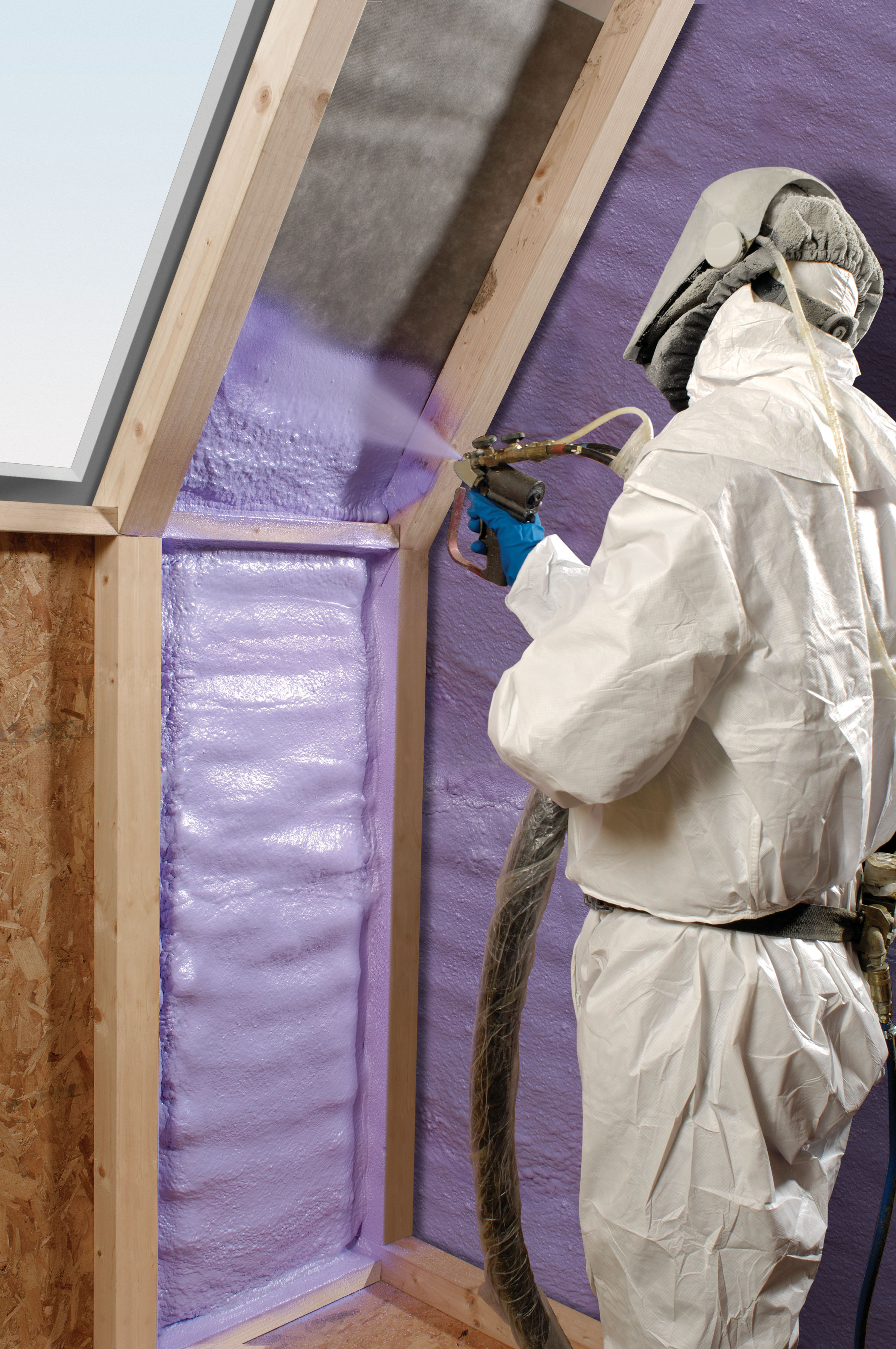
Weatherproofing Walls and Windows Against Canadian Winters
Air sealing techniques, exterior rigid foam, and weatherstripping methods that address the specific challenges of Canadian freeze-thaw cycles.
Read article →
Basement and Foundation Insulation for Cold Climates
Interior vs. exterior foundation insulation, frost depth considerations, and below-grade moisture management in Canadian housing.
Read article →| Material | Typical R-value per inch | Primary application | Vapour permeance |
|---|---|---|---|
| Fibreglass batts | R-2.9 to R-3.8 | Walls, attic floor, crawl spaces | Permeable (requires vapour barrier) |
| Blown-in cellulose | R-3.2 to R-3.8 | Attics, dense-pack walls | Semi-permeable |
| Open-cell spray foam | R-3.5 to R-3.9 | Interior wall cavities, attic decks | Permeable (requires vapour barrier) |
| Closed-cell spray foam | R-6.0 to R-7.0 | Foundation walls, below-grade, rim joists | Class II vapour retarder |
| Extruded polystyrene (XPS) | R-5.0 | Exterior foundation, under-slab | Low permeance, moisture resistant |
| Expanded polystyrene (EPS) | R-3.6 to R-4.0 | Foundation boards, continuous exterior | Moderate permeance |
| Mineral wool (rock wool) | R-3.7 to R-4.2 | Walls, fire-rated assemblies | Permeable (requires vapour barrier) |