Weatherproofing Walls and Windows Against Canadian Winters
Air leakage accounts for a substantial portion of heat loss in Canadian homes — often more than conduction through the insulated assembly itself. Identifying and sealing air bypass paths, combined with improving wall thermal continuity, forms the basis of effective weatherproofing.
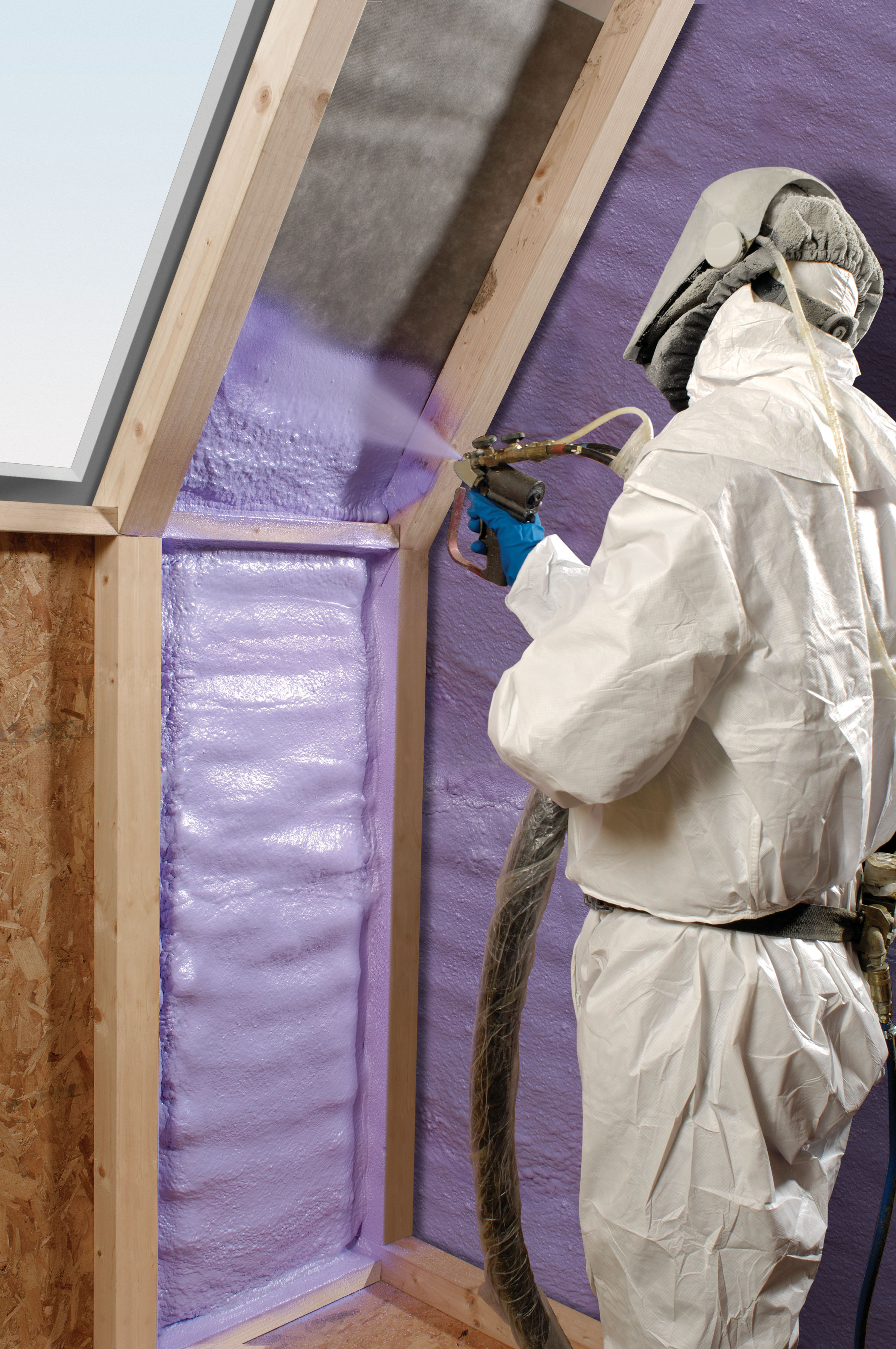
Understanding air leakage in Canadian homes
The stack effect — driven by temperature difference between indoors and outdoors — creates continuous air pressure that forces warm interior air out through high points and draws cold air in through low points. In a poorly air-sealed two-storey Canadian home during winter, this process can replace the entire air volume of the house multiple times per hour without any mechanical ventilation running.
A blower door test quantifies air leakage as ACH50 — air changes per hour at 50 Pascals of pressure. Older Canadian homes often measure 5 to 10 ACH50 or higher. Current energy codes target 2.5 ACH50 or less for new construction, while high-performance retrofits aim for 1.5 ACH50 or below.
Air sealing materials and their application
Spray foam (low-expansion)
Single-component polyurethane foam in a can — sometimes called "one-part foam" — is the standard choice for sealing gaps from about 3mm to 25mm. It expands to fill irregular cavities and adheres to wood, concrete, masonry, and metal. Low-expansion formulations are preferable around window and door frames, where high-expansion foam can distort the frame.
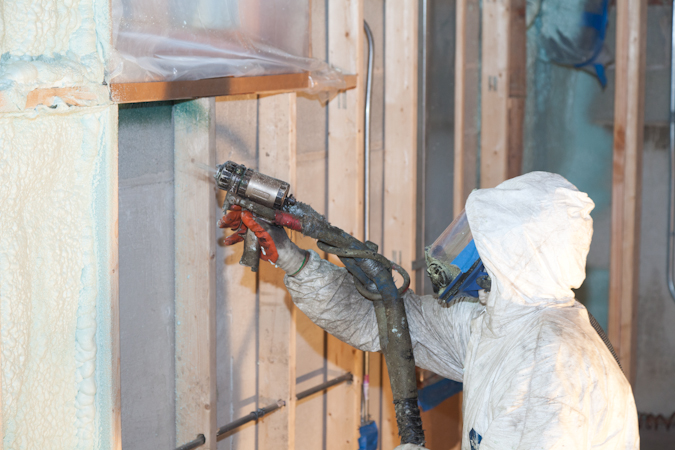
For larger penetrations and transitions at the top plate, two-component SPF kits or professional spray foam equipment provide better coverage and adhesion. The foam must be protected from UV exposure if left exposed and trimmed flush with the framing surface before covering with drywall.
Acoustical sealant (non-hardening caulk)
Acoustical sealant remains permanently flexible, making it suitable for sealing the perimeter of polyethylene vapour barriers to framing, between the bottom plate and subfloor, and around electrical boxes on the warm side of the wall assembly. Unlike silicone, acoustical sealant accepts paint and tolerates the movement typical of wood framing through seasonal humidity cycles.
Rigid foam and tape systems
Continuous exterior rigid foam — typically XPS or EPS — functions as both thermal break and, when joints are taped with compatible membrane tape, as a continuous air barrier. This approach eliminates the thermal bridging at studs that reduces the effective R-value of conventional stud-cavity insulation.
Exterior wall assemblies for cold climates
The placement of materials in a wall assembly determines whether moisture accumulates within the structure or moves safely to a drying surface. In a Canadian cold climate, the general principle is: insulation value increases from inside to outside, or the ratio of exterior-to-interior insulation must be sufficient to keep the vapour barrier above the dew point through the coldest design temperatures.
Double-stud wall
Two parallel stud walls — typically 2×4 construction — with a gap between them are filled with blown-in insulation. This achieves R-40 or higher in the wall cavity without thermal bridging at studs. The inner wall carries structural loads; the outer wall supports cladding. A double-stud assembly is common in Passive House projects in Canada and requires careful detailing at window and door openings to avoid creating thermal bridges at the sill, jamb, and head.
Exterior continuous insulation (CI)
Adding 2 to 4 inches of rigid foam to the outside of a conventional 2×6 stud wall raises the wall's effective R-value and moves the dew point further toward the exterior, reducing moisture risk within the stud cavity. For Zone 6 and 7, a minimum ratio of R-7.5 exterior foam to R-19.25 cavity insulation keeps the sheathing above freezing temperature for the design heating season. These ratios are published in building science resources and the National Building Code supplements.
Spray foam within cavities
Closed-cell SPF sprayed into existing wall cavities through small drilled holes — sometimes called injection foam or drill-and-fill — provides both insulation and air sealing in a single operation. This is often used in retrofit situations where opening the wall from the interior or exterior is impractical. The holes are plugged and the exterior cladding is restored after injection.
Window weatherproofing
Windows are the weakest thermal component of most wall assemblies. Even a high-performance triple-pane window rated at approximately R-7 to R-9 centre-of-glass is far below the adjacent insulated wall. The junction between the window frame and the rough opening is a common air leakage point in existing homes.
Weatherstripping types and durability
Weatherstripping seals the operable sash against the frame and stops infiltration around the moveable components. Different materials suit different conditions:
- Compression foam tape: Low cost, easy to install, but compresses and loses effectiveness within 2 to 3 heating seasons in high-use applications
- V-strip (tension seal) weatherstripping: Spring bronze or plastic, installed in the channel where the sash slides; durable and effective for double-hung windows
- Pile weatherstripping (brush seal): Used on sliding windows and doors; tolerates lateral movement; less effective at very high pressure differentials
- Foam-filled EPDM bulb: High durability, good compression set resistance, suitable for door frames and casement windows in cold climates
Air sealing the rough opening
Between the window frame and the rough opening framing, low-expansion foam or backer rod with acoustical sealant should fill the gap. Many window installations rely on fibreglass batt scraps stuffed into the gap, which provides insulation but no meaningful air barrier. In a pressurized blower door test, this gap is one of the most reliably detected leakage points in the building envelope.
Door and threshold sealing
Exterior doors lose heat through the door slab itself, the frame, and the threshold. Older doors with single-pane glass lights or solid wood panels have very low thermal resistance. Door bottom sweeps and threshold seals address the gap at floor level, which is often one of the largest single air leakage openings in a house. Automatic drop seals compress when the door closes and retract when it opens, providing a superior seal compared to static brush sweeps.
The door frame perimeter, including the threshold anchor, should be caulked on the interior with low-expansion foam or sealant. Exterior caulking at the brick mould or casing prevents wind-driven rain infiltration and reduces air movement around the frame.
Thermal bridging at wall penetrations
Structural elements that pass through the insulated plane — wall ties, masonry shelf angles, cantilevered balcony slabs, and through-wall fasteners for cladding — conduct heat across the assembly regardless of the insulation's R-value. These thermal bridges are the reason that nominal R-values of insulation products do not translate directly into whole-assembly R-values. Addressing thermal bridging through continuous exterior insulation is the most effective available remedy in most retrofit situations.
Freeze-thaw considerations specific to Canadian climates
Materials at or near the exterior of a wall assembly experience freeze-thaw cycling throughout the transition seasons. Caulk joints, flashing, and window sill pans must accommodate movement without cracking or losing adhesion. Silicone and modified silicone caulks tolerate wider temperature ranges than acrylic latex products. Flashing at window sills and wall penetrations should be installed with positively sloped drainage planes so any moisture that enters can exit before freezing traps it within the assembly.